How did English become the language we know today?
The story of English is not simply a story of words. It is a story of migration, conquest, cultural encounter, political change, religion, education, literature, and identity. From the Celtic and Roman foundations of Britain to the arrival of the Germanic peoples, the rise of Anglo-Saxon England, the Norman Conquest, and the emergence of Middle English, the English language was continually reshaped by the people who spoke, wrote, and transmitted it.
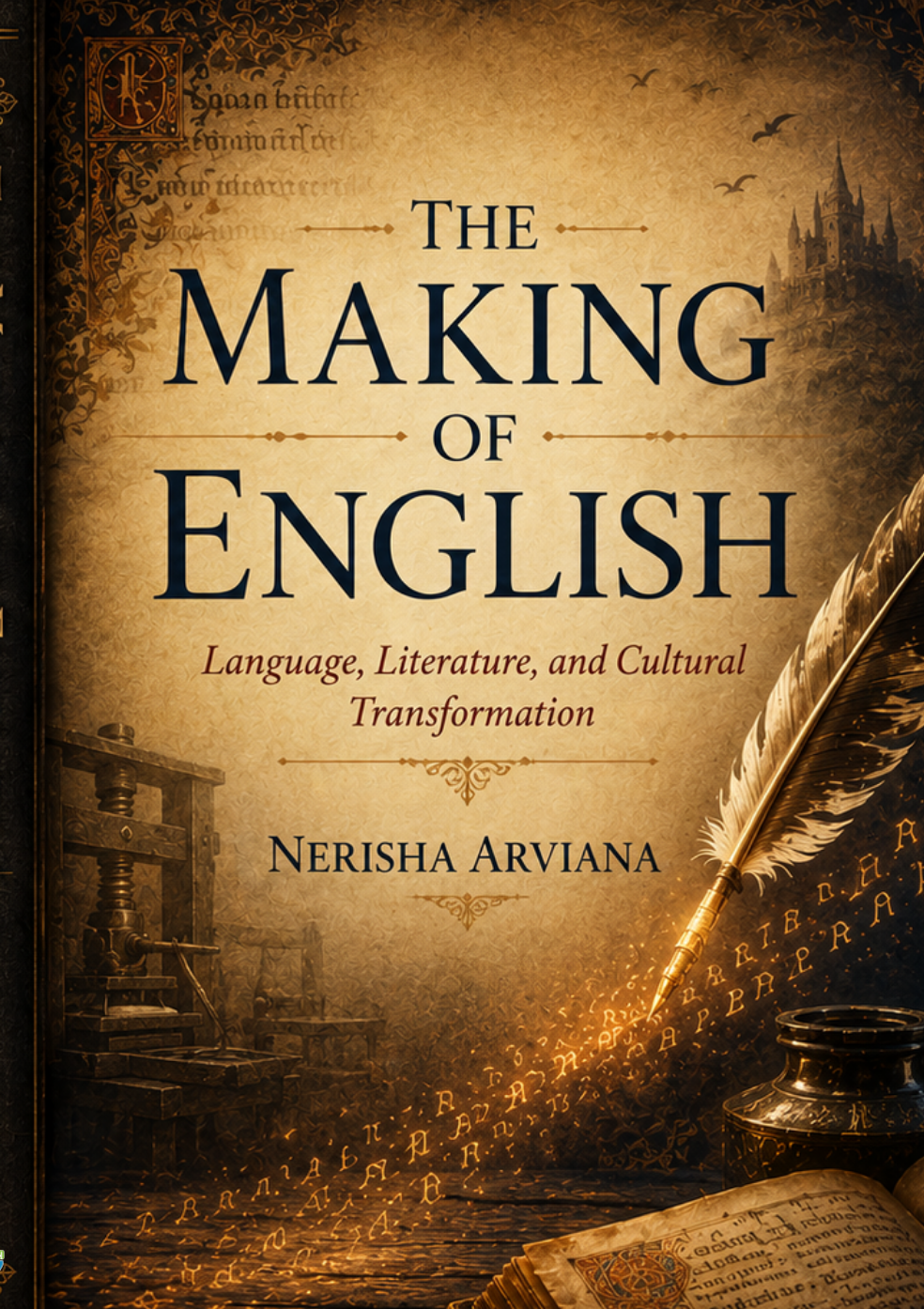
The Making of English traces this remarkable transformation through both language and literature. It explores the development of Old English, the influence of Latin and Christianity, the literary culture of the Anglo-Saxons, and the profound linguistic consequences of Norman rule. The encounter between English, French, and Latin produced changes in vocabulary, pronunciation, grammar, education, administration, and literary expression, gradually giving rise to a new linguistic and cultural identity.
The book also follows the emergence of English as a literary language through chronicles, poetry, romances, religious writings, prose, and the works of writers such as Geoffrey Chaucer and John Wycliffe. It examines how English gradually moved from the margins of official and intellectual life toward becoming a language of education, public administration, literature, and national identity.
The introduction of printing, particularly through the work of William Caxton, marks another decisive moment. Printing expanded the circulation of English texts, encouraged greater linguistic stability, and helped establish English as an increasingly influential literary medium.
Written for readers interested in the history of language, literature, and culture, this book offers a journey into the forces that shaped English before it became a global language.
To understand English today, we must first understand how it was made.