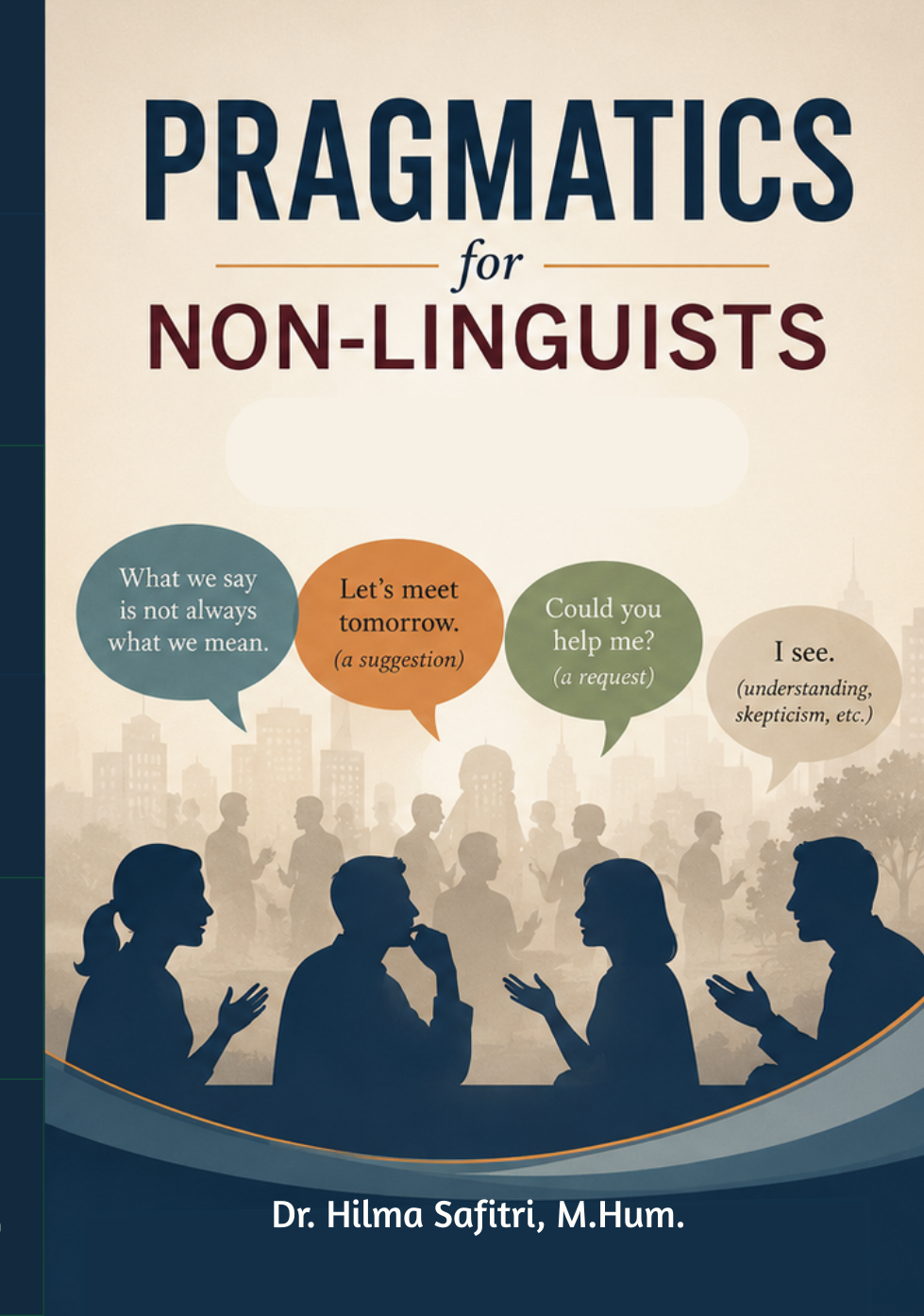
This book, Pragmatics for Non-Linguists, introduces pragmatics as the study of language in use. It is written for readers who may have little or no background in linguistics but who want to understand how people create, interpret, and negotiate meaning through communication. The book begins from a simple premise: speaking is a form of social action. When people communicate, they do more than exchange information. They make requests, give advice, promise, apologize, express attitudes, negotiate relationships, open and close conversations, and influence how others understand social reality.
These actions depend on context, shared knowledge, social relationships, communicative purposes, and cultural expectations. The discussion introduces key concepts in pragmatics, including speech acts, illocutionary and perlocutionary acts, implicit meaning, presupposition, conversational maxims, politeness, and inferential interpretation. It then considers conversation as a fundamental framework of human interaction, including turn-taking, conversational sequences, openings, and closings.